Further refine your search:

The Umbrian Republic Military
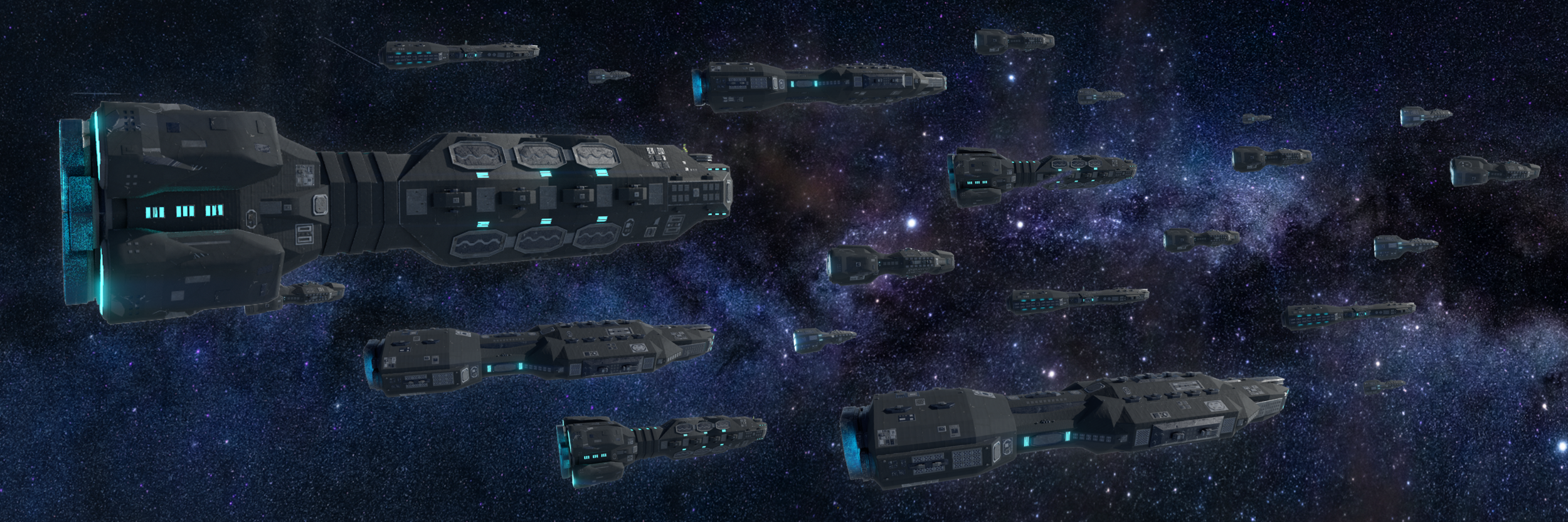
Confident that they would inevitably encounter alien life in the vast expanses of the greater galaxy, the Umbrian Republic saw the maintenance of a strong military as a prudent step to safeguard their society. With the sudden and unprovoked attack by the Ascomanni, that prudence would ensure that the Republic did not immediately succumb to their alien adversaries.

The Modern Fleet
By the time war broke out, URN doctrine had crystalized into several key elements, with specific responsibilities assigned to warships created for those intended purposes. These responsibilities would detail how the various components of the fleet worked together, and the roles specific warships and other craft would play in conducting offensive and defensive operations in defense of the Republic.

The Frontier Reaction Force
The Frontier Reaction Force, better known as the Reaction Force, or RF, was a paramilitary organization established to support colonial development through customs enforcement and interplanetary policing. The organization would grow from a small dedicated group of a few hundred to include over two hundred thousand personnel, specializing in a broad range of disciplines.

The Combined Intelligence Directorate
Formed after the start of the Ascomanni conflict, the Combined Intelligence Directorate, or CID, was created by amalgamating the various civilian and military intelligence organizations into a single entity. As such, its powers stretched across both spheres of operation, though its role in supporting the war effort would become its primary focus.

Railguns
Railguns became standard weapons platforms on the Umbrian Republic Navy's warships long ago, as power plants were developed with sufficient capacity to handle their energy-intensive operations. As these power cores began to shrink in size and grow in efficiency, even the smallest cutters and corvettes in the fleet could now field these weapons.

Power Armor
The idea of an exosuit or other forms of mechanical enhancements to a soldier's mobility and strength had been the subject of numerous development efforts throughout the early portion of the century. These ranged from combat frames that helped alleviate the load of a soldier's equipment to fully sealed armored suits which offered enhanced protection from small arms fire and fragmentation. Several systems were extensively field tested, but none had been issued for wide spread use by the start of the Battle of Battipaglia.